Hardcover, 390 pages
English language
Published 1985 by Times Books.
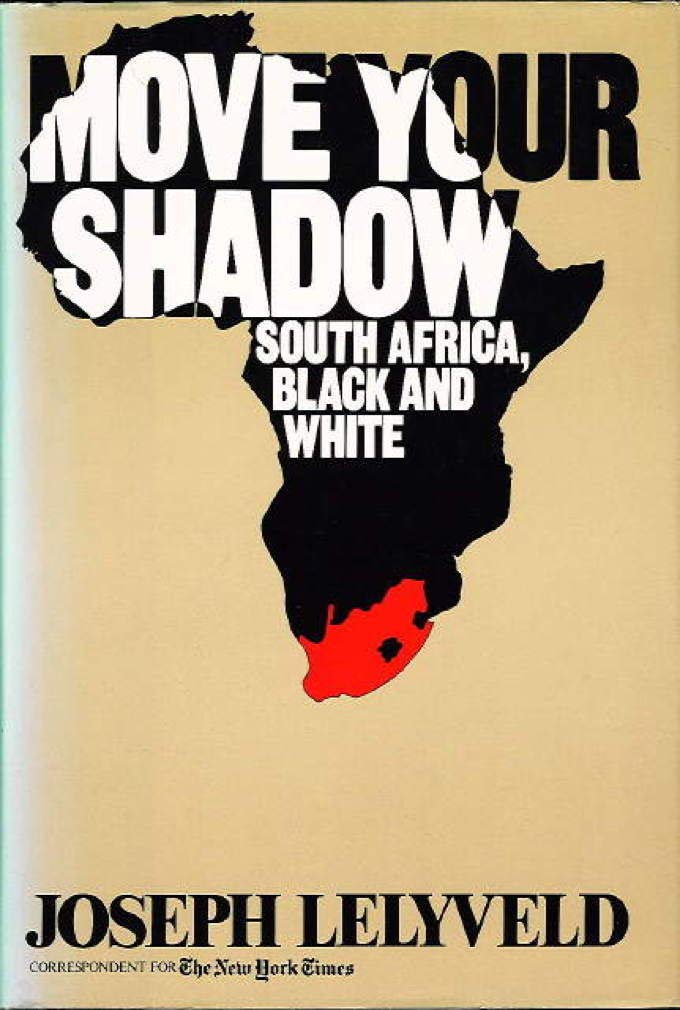
Hardcover, 390 pages
English language
Published 1985 by Times Books.
From two-time New York Times South Africa correspondent Joseph Lelyveld, a poignant, powerful, and indispensable look at the South African way of life and its pervasice racial policy.
With telling anecdote and a remarkable eye for detail, Mr. Lelyveld portrays South Africa as a real place, not merely a familiar problem. The South Africans in Move Your Shadow are not clichés, but blacks and whites trapped in the shadow of a government of the few, of oppression and violence, of suffering and fear, of privilege and helplessness—and of the inevitability of conflict.
Expelled from South Africa in the mid-1960's, Mr. Lelyveld returned fourteen years later. The apartheid be returned to—and its evolution—is captured here in memorable detail. We hear it in the words of bogus "intellectuals," whose theories of racial superiority make one laugh, and then shudder, and of jurists whose laws circle back on themselves to render their very …
From two-time New York Times South Africa correspondent Joseph Lelyveld, a poignant, powerful, and indispensable look at the South African way of life and its pervasice racial policy.
With telling anecdote and a remarkable eye for detail, Mr. Lelyveld portrays South Africa as a real place, not merely a familiar problem. The South Africans in Move Your Shadow are not clichés, but blacks and whites trapped in the shadow of a government of the few, of oppression and violence, of suffering and fear, of privilege and helplessness—and of the inevitability of conflict.
Expelled from South Africa in the mid-1960's, Mr. Lelyveld returned fourteen years later. The apartheid be returned to—and its evolution—is captured here in memorable detail. We hear it in the words of bogus "intellectuals," whose theories of racial superiority make one laugh, and then shudder, and of jurists whose laws circle back on themselves to render their very words meaningless. We hear it in the words of South African government officials, black nationalists, white liberals, black policemen and informers, Afrikaner clergymen ostracized for their support of black causes.
Apartheid is defined in the stories of squatters near Cape Town sheltering themselves from winter rain in makeshift structures of twigs and polyethylene garbage bags; in reports of the experiences of black student leaders jailed and tortured and of the legal horrors faced by a light-skinned "colored" single mother found to be living in a "white" area; in descriptions of the lives of blacks forced to work in segregated townships hundreds of miles from their families in black "homelands"; in the poignant portraits of Afrikaners desperately trying to reconcile white power with some notion of justice in order to forestall a black takeover; and in the venomous declarations of right-wing fanatics.
With every vignette, with every story of brutality or courage, with every glimmer of hope and every seemingly unresolvable problem, with every description of a life preordained or doomed, South Africa, a caldron of discontent, becomes a vivid landscape over which a shadow grows larger and more ominous by the day.
Move Your Shadow is an unforgettable book, a classic portrait of a country and its people. Its appearance could not be more timely, or more important.