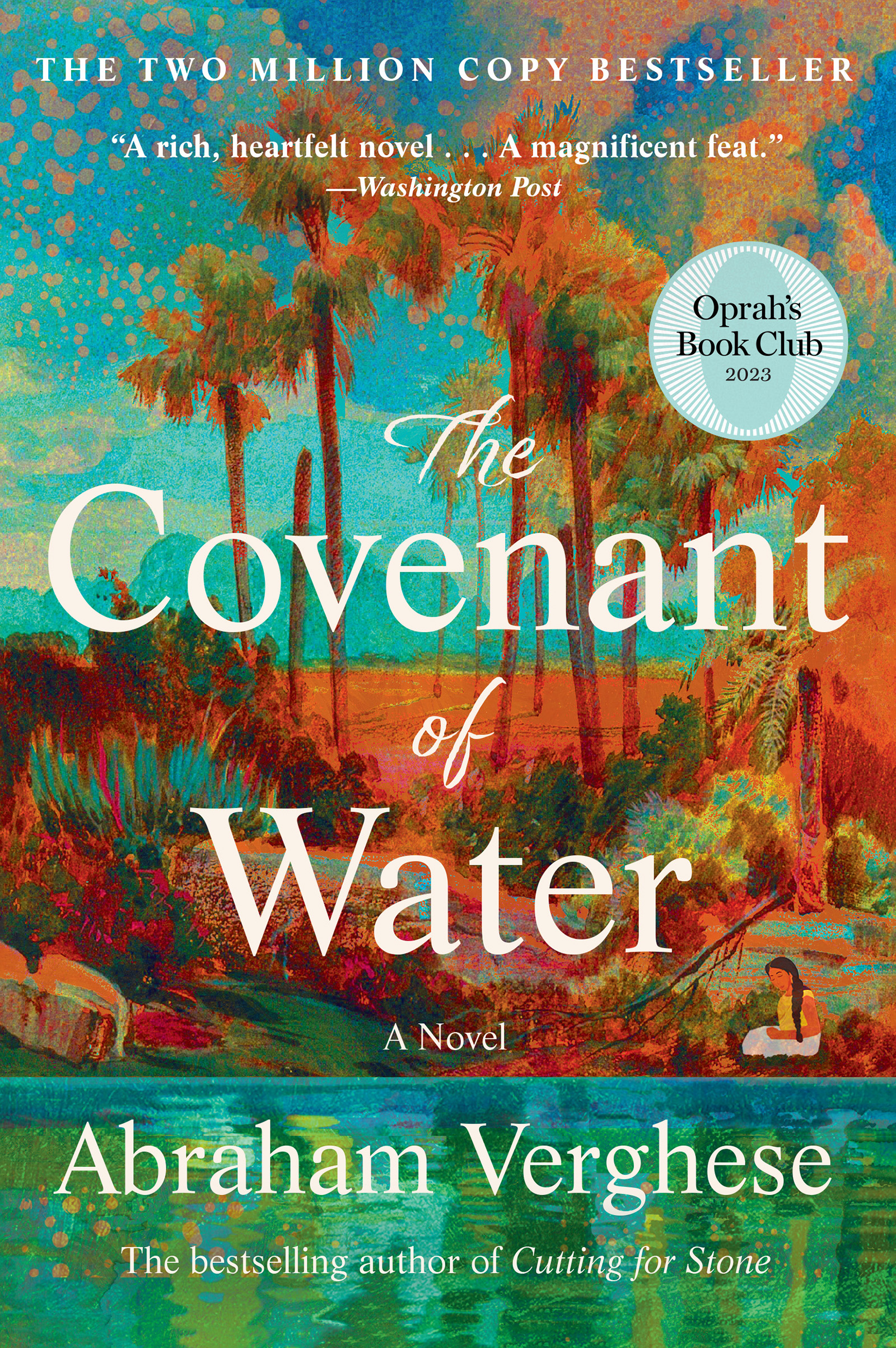

The Covenant of Water

eBook, 736 pages

English language

Published May 2, 2023 by Grove Press.

ISBN:
978-0-8021-6218-2
Copied ISBN!
OCLC Number:
1354771768
ASIN:
0802162185
Goodreads:
230812191

View on OpenLibrary

View on Inventaire

(2 reviews)

The Covenant of Water is the long-awaited new novel by Abraham Verghese, the author of the major word-of-mouth bestseller Cutting for Stone, which has sold over 1.5 million copies in the United States alone and remained on the New York Times bestseller list for over two years.

Spanning the years 1900 to 1977, The Covenant of Water is set in Kerala, on South India’s Malabar Coast, and follows three generations of a family that suffers a peculiar affliction: in every generation, at least one person dies by drowning—and in Kerala, water is everywhere. At the turn of the century, a twelve-year-old girl from Kerala’s long-existing Christian community, grieving the death of her father, is sent by boat to her wedding, where she will meet her forty-year-old husband for the first time. From this unforgettable new beginning, the young girl—and future matriarch, known as Big Ammachi—will witness unthinkable changes over the …

7 editions

Unnecessarily long.

This was a chonker of a book that I feel really didn't need to be so big. I appreciate that Verghese was giving detailed background to the characters, but when you're 3/4 of the way through the massive book and wondering how everything comes together still, it's a little much.

I was glad to get an actual explanation behind the water curse that wasn't just some mystical occurrence. It was nice to have the reference of science helping to explain mysterious happenings that we hadn't previously been able to understand.

Overall, I would say the storyline was at least enjoyable enough, but I won't ever feel compelled to revisit this one in the future.
Beautiful prose but gets a bit long

It's a long book (715 pages) that tells of the saga of many characters in India from the beginning of the century to the 60's. English (as opposed to most latin languages) is difficult to turn into something beautiful but Verghese somehow achieves this in his writing. The problem is that he takes on too many characters and it's not long before you get a little lost and as a result it becomes difficult to root for one character in particular. He also uses a lot of native language sentences and words which certainly doesn't help. But a nice book nevertheless.
Apparently another book of his is much better: Cutting from Stone and I'm planning to have t look.