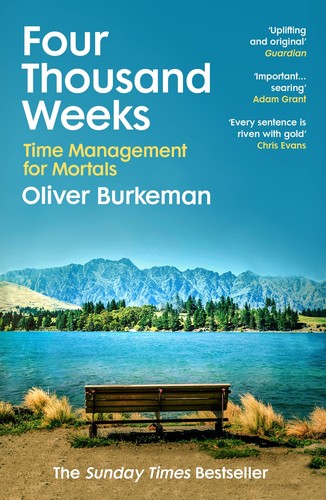
The average human lifespan is absurdly, outrageously, insultingly brief: if you live to 80, you have about four thousand weeks on earth. How should we use them best?
Of course, nobody needs telling that there isn't enough time. We're obsessed by our lengthening to-do lists, our overfilled inboxes, the struggle against distraction, and the sense that our attention spans are shrivelling. Yet we rarely make the conscious connection that these problems only trouble us in the first place thanks to the ultimate time-management problem: the challenge of how best to use our four thousand weeks.
Four Thousand Weeks is an uplifting, engrossing and deeply realistic exploration of this problem. Rejecting the futile modern obsession with 'getting everything done,' it introduces readers to tools for constructing a meaningful life, showing how the unhelpful ways we've come to think about time aren't inescapable, unchanging truths, but choices we've made, as individuals and …
The average human lifespan is absurdly, outrageously, insultingly brief: if you live to 80, you have about four thousand weeks on earth. How should we use them best?
Of course, nobody needs telling that there isn't enough time. We're obsessed by our lengthening to-do lists, our overfilled inboxes, the struggle against distraction, and the sense that our attention spans are shrivelling. Yet we rarely make the conscious connection that these problems only trouble us in the first place thanks to the ultimate time-management problem: the challenge of how best to use our four thousand weeks.
Four Thousand Weeks is an uplifting, engrossing and deeply realistic exploration of this problem. Rejecting the futile modern obsession with 'getting everything done,' it introduces readers to tools for constructing a meaningful life, showing how the unhelpful ways we've come to think about time aren't inescapable, unchanging truths, but choices we've made, as individuals and as a society - and its many revelations will transform the reader's worldview.
Drawing on the insights of both ancient and contemporary philosophers, psychologists, and spiritual teachers, Oliver Burkeman sets out to realign our relationship with time - and in doing so, to liberate us from its grasp.
If you're a perpetually busy person seeking meaning and clarity in your everyday life, this one's for you. The book tackles the negatives of ever-increasing productivity, staring down your own mortality, taking the time to enjoy life, embracing mediocrity in hobbies, and finding comfort in who you are rather than striving to be the person you believe you ought to be.
We are all going to die, so don’t stress yourself and do what is important to you. The book is not about how to manage minutes of your schedule, but how to live meaningful life
It ain't gonna help you do your daily work but it'll provide a bit of perspective when you feel like you're feeling anxious or just burnt out. It's a rare treat.
A good alternative to traditional time management books
3 stars
I read this as the description really spoke to my todo-list overwhelm and feeling that everything needed to be done.
This book reminds you of the obvious - we're all finite, todo lists are always infinite. You were never going to get everything done anyway, so stop worrying about it. Instead, prioritise ruthlessly, choose things that you're willing to let go or fail at, and value the "now" over the unreachable future that you think will exist when you finish your todo list.
Overall, the book does what it sets out to achieve fairly well. Unfortunately it has a narrowly neurotypical view and doesn't really give space for those of us who struggle to let things go and often fall into absolutist thinking about their todo list. It also makes assumptions that everyone wants similiar things in a few places, especially when it talks about relationships - we don't all …
I read this as the description really spoke to my todo-list overwhelm and feeling that everything needed to be done.
This book reminds you of the obvious - we're all finite, todo lists are always infinite. You were never going to get everything done anyway, so stop worrying about it. Instead, prioritise ruthlessly, choose things that you're willing to let go or fail at, and value the "now" over the unreachable future that you think will exist when you finish your todo list.
Overall, the book does what it sets out to achieve fairly well. Unfortunately it has a narrowly neurotypical view and doesn't really give space for those of us who struggle to let things go and often fall into absolutist thinking about their todo list. It also makes assumptions that everyone wants similiar things in a few places, especially when it talks about relationships - we don't all want a life time monogamous relationship with children and a white picket fence. IMHO a book like this should just avoid talk of relationships if it's going to spend too few pages on them to do them justice.
For me, this books has provided a much needed alternative perspective on things and there are some suggestions which I will take away and try to implement.